Deep Azure - Shakespeare’s Globe - Raw Material Review
A review by Phillip Wilberforce
Foreword:
Watching Deep Azure at Shakespeare’s Globe was a special experience for me because it was my first time going to the theatre. I want to thank Raw Material for giving me that opportunity. It opened my eyes to a completely different way of experiencing storytelling. One of the first things that intrigued me was the fact that you couldn’t record anything on your phone inside the theatre. In a very tech heavy society where we document almost everything, being forced to put my phone away made me appreciate the moment more and focus on the play. I also really liked how the theatre was set up. The intimate candlelit space made it feel like this was how plays might have been experienced during Shakespeare’s time. It made the environment feel welcoming and immersive and reminded me how inviting theatre can be.

Selina Jones and Jayden Elijah
Photography : Sam Taylor
At the beginning of the play the performance style reminded me slightly of school drama, but as the story continued I began to really appreciate the musicality of the production. I loved the gospel and hip hop influences in the music. The use of call and response was powerful and engaging, and I enjoyed how the actors used their voices as instruments. The music moved between hip hop, gospel and even moments that felt like US trap. As a music producer it was inspiring to see how rhythm, voice and poetry could drive a theatrical performance. It reminded me how powerful the human voice can be as an instrument on its own.
Tone was probably the most relatable character for me. I liked his outgoing personality and how loyal and passionate he was towards his friends. I also appreciated how he supported Deep’s change in personality as Deep became more theological and spiritual, embracing his Christian faith. Tone’s struggle with anger and revenge after Deep’s death was one of the most powerful elements of the play and probably my favourite part. His emotional journey was reflected through rhythm and delivery. At times his flow felt like polyrhythms, layered and chaotic, and then it became more dynamic and intense as he moved through moments where he was considering retribution. Watching that transformation through music and poetic rhythm was amazing.

Selina Jones as Azure
Photography: Sam Taylor
I also found the Christian structure within the play very interesting. It was complex and sometimes difficult to fully grasp, but it felt like each character had their own kind of letter or passage, almost like how Paul wrote letters in the Bible. It felt like each character experienced a spiritual moment where their flaws were exposed and they had to confront themselves. One of the best moments musically was the courtroom scene. The gospel elements during the moment when Azure received the bad news were incredible. The vocal runs and harmonies were powerful and emotional and really showed how music could carry the weight of the story.
The play’s themes around death, souls and the idea that people in the afterlife still influence the people they love were really interesting, especially through the lens of police brutality. As a Black British boy from South London I could relate to some of those themes. Losing people in the community through violence or other circumstances is something many people understand. Life changes when someone is gone, but the world keeps spinning. It becomes the responsibility of the living to carry their memory forward.
Azure’s internal conflict after Deep’s death was portrayed well through the music and rhythm of her character. Her delivery often felt erratic and unstable, which reflected her grief and her struggles with disordered eating. I also liked how the play showed memories of her relationship with Deep. In those flashbacks he seemed very romantic and someone who wanted the best for her. At the same time there were moments where he seemed unsure or slightly stressed about her feelings about her weight. It made me think about how difficult it can be in relationships to navigate helping someone with serious issues like body dysmorphia. At times it almost felt like there was an element of Azure changing her body to fit what she believed Deep’s idea of love might be. That dynamic of changing yourself in order to find or maintain love was interesting to watch. I cannot speak from a Black woman’s perspective on that experience, but it would have been interesting to know more about whether Deep was aware of how she felt and what he did to try to stop her from feeling that pressure. By the end of the play I also found myself hoping that Azure eventually gained more self love. The story seems to end with her feeling lost in her mental state after discovering that Deep was killed out of jealousy. I almost wished she could have been more selfish in that moment and focused on making sure she was okay and able to heal.
I also loved seeing the diaspora reflected through the styling of the characters. The costumes moved between kente inspired garments and a more African American aesthetic, which visually represented different parts of Black culture and identity.
There were moments where I found the plot a little confusing, particularly around the spiritual or angel like figures in the story. They felt like guardians for Azure and Deep, especially when Deep appeared in the afterlife almost like a Christ like figure offering guidance and grace. It was an interesting idea but it took time to fully understand.
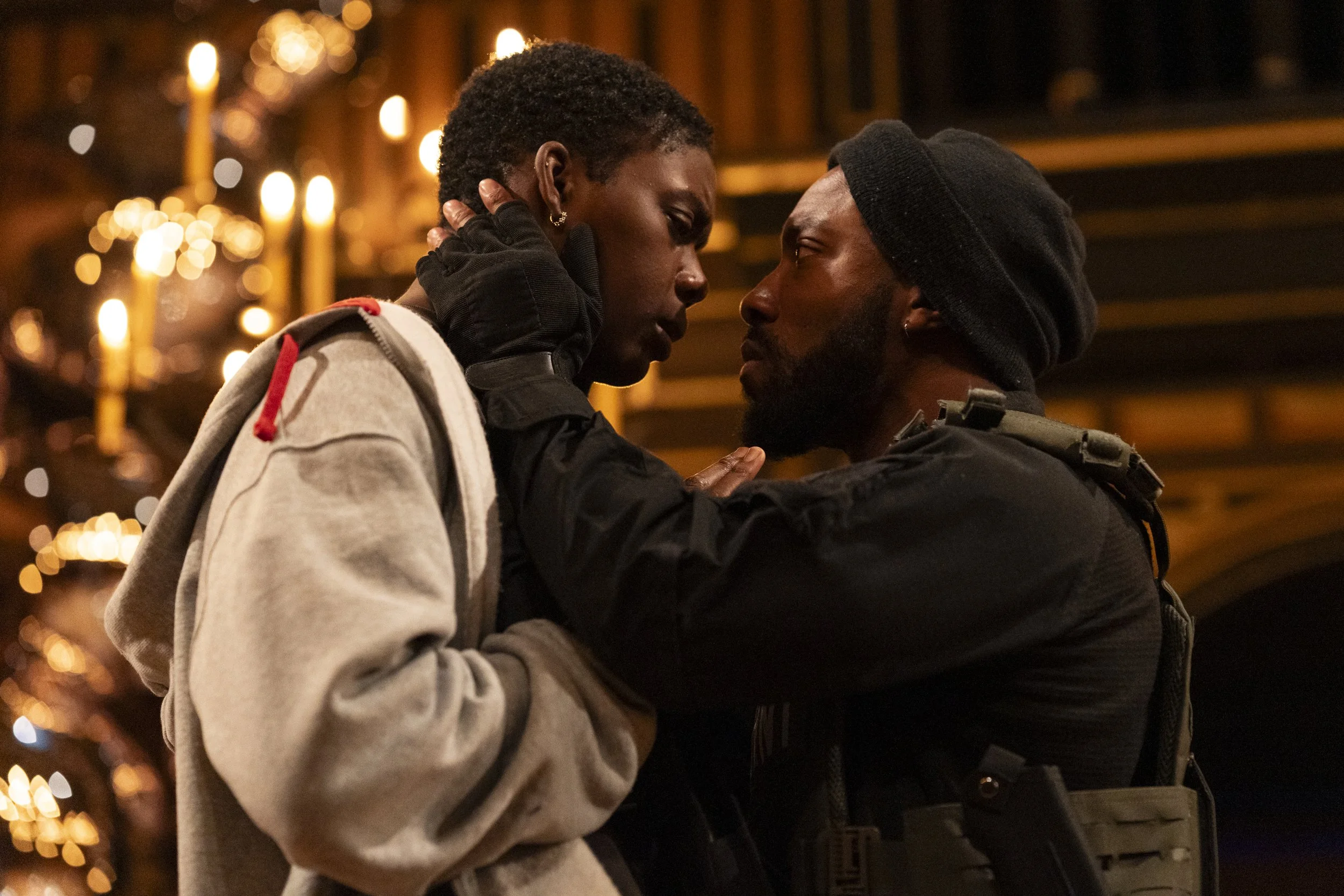
Selina Jones as Azure and Elijah Cook as Tone
Photography: Sam Taylor
I also wish the story showed more of Deep’s experience at university. It seemed like he attended something similar to a historically Black college or university, which is an experience that does not really exist in the same way in the UK. I would have liked to see more of his development as a person and understand how he was growing into a better human being. It would have made his death feel even more tragic because it cut that journey short. I think many people have a story like that, where someone’s potential and future are taken away too soon.
I struggled with Roshad’s character as well. The twist involving him felt like it needed more development. Personally I often find it difficult to sympathise with Black male characters written into military or police roles because of the real history of how those institutions treat Black communities. His behaviour, especially kissing Azure after Deep’s death, made him seem sly and untrustworthy. Other characters had their flaws explored such as Tone’s anger and his use of alcohol and weed, but I felt Roshad needed more depth and explanation.
Overall I really enjoyed the play. It was emotional, musical and thought provoking. For my first theatre experience it was powerful and memorable, and it definitely made me want to watch more theatre in the future.
Deep Azure |Written by Chadwick Boseman
The show runs at Shakespeare’s Globe until 2nd May 2026 with tickets starting at £5.
This play contains the use of racist and offensive language and references to violence, racism, police brutality and eating disorders.
A special thank you to Shakespeare’s Globe for inviting Raw Material reviewers along to see this beautiful show and for supporting us in all areas of accessibility.