You Are Here - Southbank Centre - Raw Review
A review by Phillip Wilberforce
Experiencing You Are Here at the Southbank Centre felt less like watching conventional theatre and more like moving through Britain’s cultural subconscious. Blending installation art, live performance, choreography, sound design and historical symbolism, the production created an immersive and emotionally layered experience. As a creative director and music producer myself, I appreciated how intentional every detail felt, from the smoke-filled corridors to the transitions in sound, costume and staging. Nothing felt random.
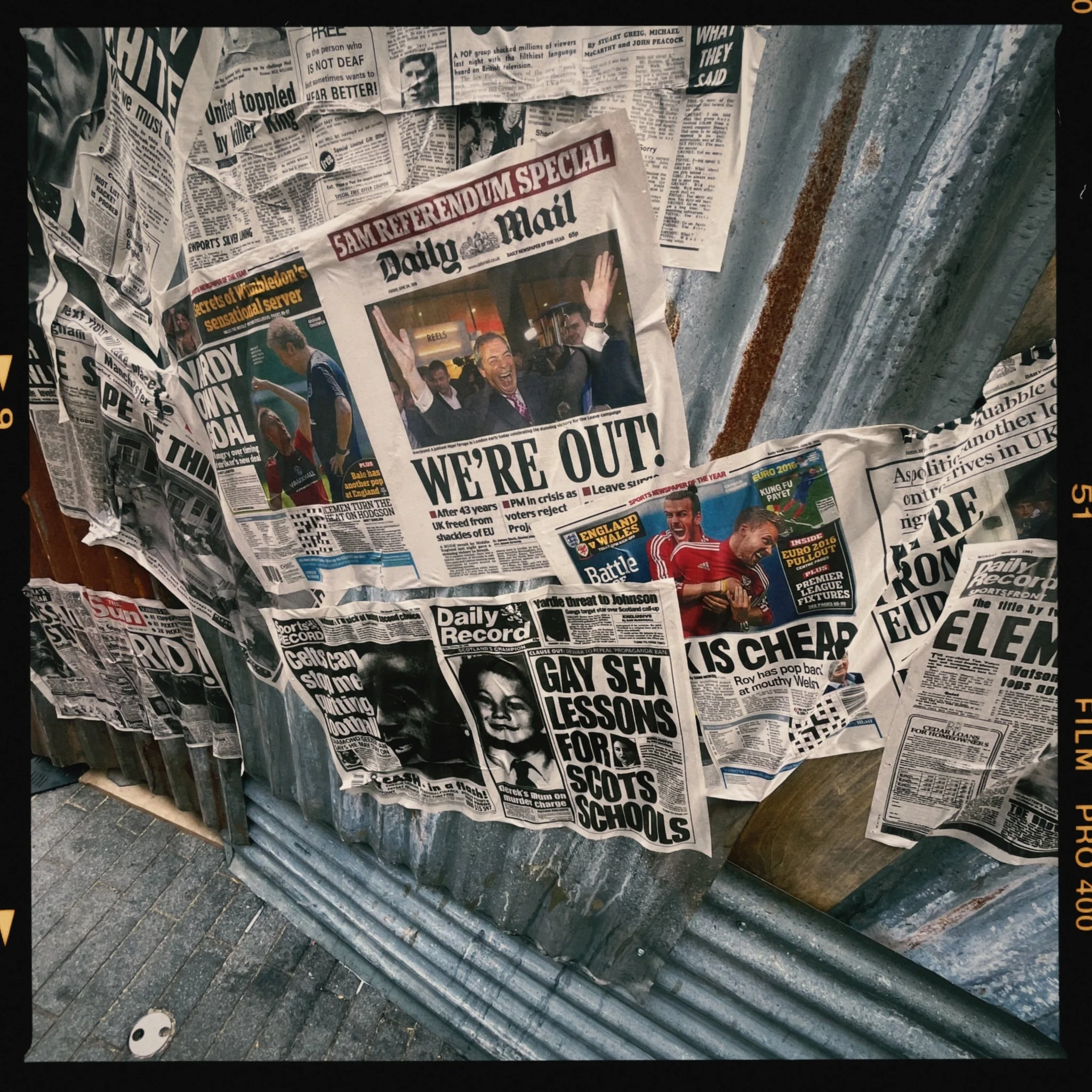
From the beginning, the atmosphere felt unsettling. Narrow walkways lined with metal fences created feelings of restriction, while thick grey smoke and eerie audio discussing “returning to London” made the audience feel as though they were travelling through unresolved history itself. Burnt street signs, damaged post boxes, bin bags and scattered newspapers strongly referenced wartime Britain and periods of national instability linked to both World Wars.
The newspapers became one of the strongest visual motifs within the production. They felt less like props and more like historical fragments documenting Britain’s cycles of conflict, fear and resistance. One headline that stood out was “Out of Hate Ghetto” from the Daily Record, referencing the Battle of Brixton. As somebody from South London, this immediately resonated because Brixton often feels like a place where history continuously reshapes itself. Images of police arrests reinforced themes surrounding race, policing and class conflict in Britain.
A quote from Linton Kwesi Johnson stayed with me throughout the experience: “How can there be calm when the storm is yet to come?” Even before researching its origins in Two Sides of Silence, the quote felt universally relevant to Britain’s recurring tensions surrounding war, race, inequality and economic instability. Learning that the poem combined themes of oppression with jazz-inspired rhythms made the production feel even more cohesive because similar jazz textures appeared throughout the sound design.
As another Ghanaian creative, it was inspiring seeing such a significant Black British voice woven so prominently into the work. The quote also connected strongly to the later Windrush scenes, reflecting both the optimism and uncertainty experienced by migrant communities.
The actors elevated the experience through physical performance rather than dialogue. Silent movement, choreography and audience interaction communicated emotion with remarkable intensity. Early 1950s London-inspired scenes were especially effective. Grey-faced actors moved silently through smoke while police directed crowds around them. One female performer wandering with a ticket appeared completely lost, symbolising migrants or displaced people navigating an unfamiliar London. The silence within these scenes forced the audience to focus on body language and atmosphere, making the tension feel even stronger.
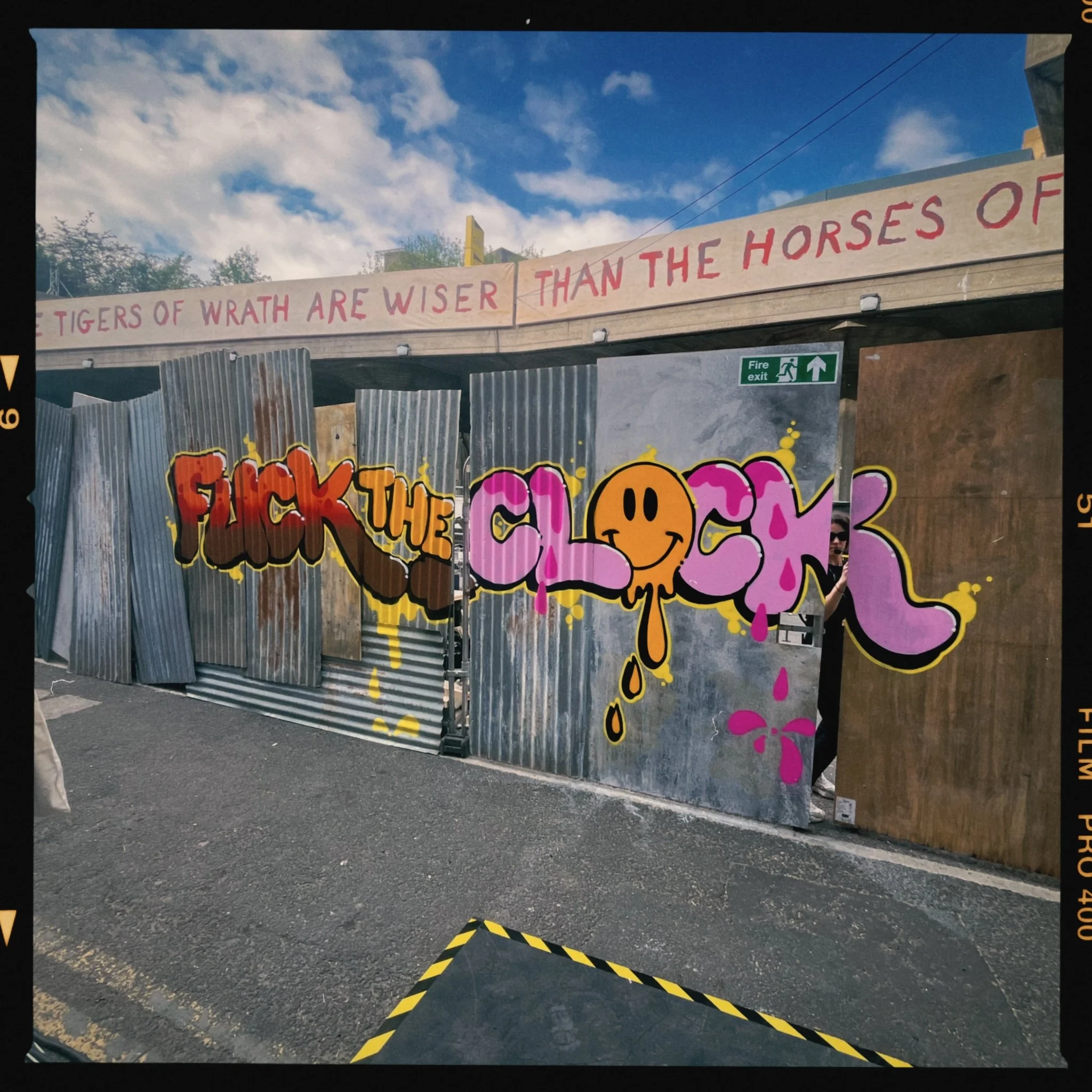
Before entering the punk-inspired sections, strange visual references such as “9589 GBX” and “All Share Index 0.089%” suggested themes surrounding capitalism, financial systems and modern economic uncertainty. These details reflected how the production constantly blurred historical and contemporary anxieties together.
The transition into the punk section became one of the strongest moments within the experience. A destroyed Jaguar Mark 2 covered in anarchist imagery immediately symbolised rebellion and anti-establishment culture. Research later revealed the car’s deeper significance. Produced between 1959 and 1967, the Jaguar Mark 2 became associated with both British police forces and criminal getaway drivers. Its destruction therefore symbolised rebellion attacking traditional British respectability itself.
The wider punk section focused heavily on youth identity and generational resistance. References to punk culture alongside Teddy Boys and Teddy Girls connected different eras of British youth rebellion. One line about a young person wanting to “belong to the world” whilst questioning “why should I?” reflected the uncertainty many young people experience navigating identity, expectations and social pressure. Learning afterwards that Teddy Boys and Girls are often considered Britain’s first true youth subculture made the production even more powerful because it framed rebellion as a recurring cycle rather than a modern phenomenon.
The Windrush section became one of the emotional centres of the production. The use of London Is the Place for Me captured the optimism many Caribbean migrants carried when arriving in Britain, believing England represented opportunity and advancement. The production contrasted this hope against darker reggae sounds and growing tension surrounding racism, immigration and cultural conflict.
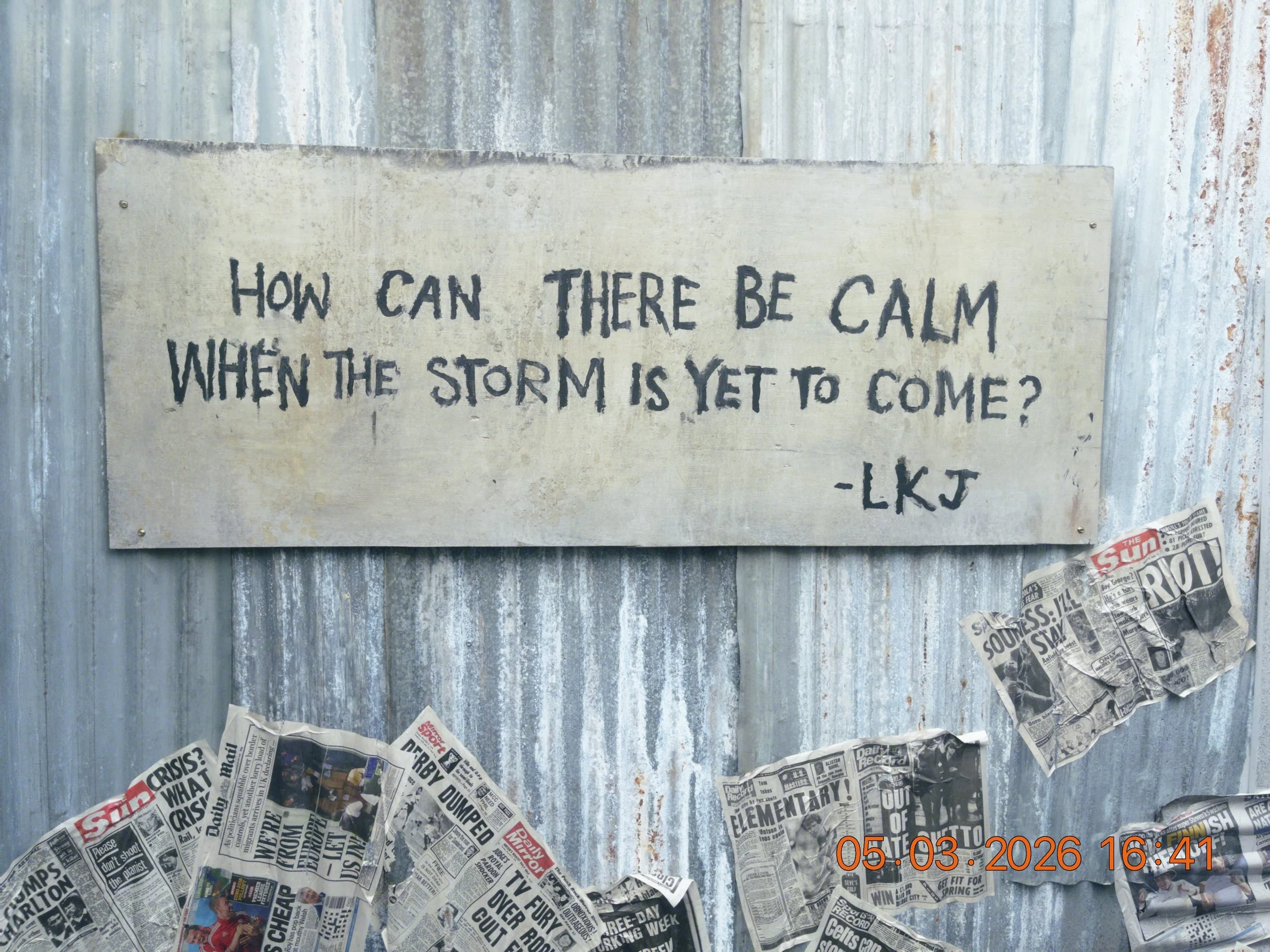
Photo: PKB
Musically, the production was exceptional. Orchestral strings, jazz textures, reggae rhythms, grime-inspired percussion, techno, dubstep and drum and bass reflected Britain’s cultural evolution across decades. The sound design recreated both underground rave culture and the tension underlying modern London nightlife. Choreography communicated similar ideas visually, from silent dancing in earlier scenes to aggressive stomping routines and dance battles between opposing groups. Eventually, these groups began dancing together, symbolising how British culture itself is shaped through conflict, migration and cultural blending.
The rabbit section became one of the most unsettling moments within the production. Distorted rabbit noises and eerie music created discomfort, while the rabbits’ upper-class clothing resembled wealthy garden party fashion. After they caused chaos, workers dressed as refuse collectors entered to clean the mess, highlighting themes of class and labour. One actor aggressively telling me to move aside whilst cleaning carried visible frustration and reflected the emotional labour and invisibility often experienced by working-class people.
Surreal imagery remained memorable throughout. Funeral flowers labelled “society” and “equality” suggested the collapse of these ideals, while projections of Queen Victoria reinforced how imperial history still lingers beneath contemporary British identity. Towards the end, flashing lights, techno, dubstep and drum and bass transformed the production into something resembling modern London nightlife. Yet beneath the celebration remained an ongoing sense of tension, as though Britain was trapped repeating cycles through different generations and aesthetics.
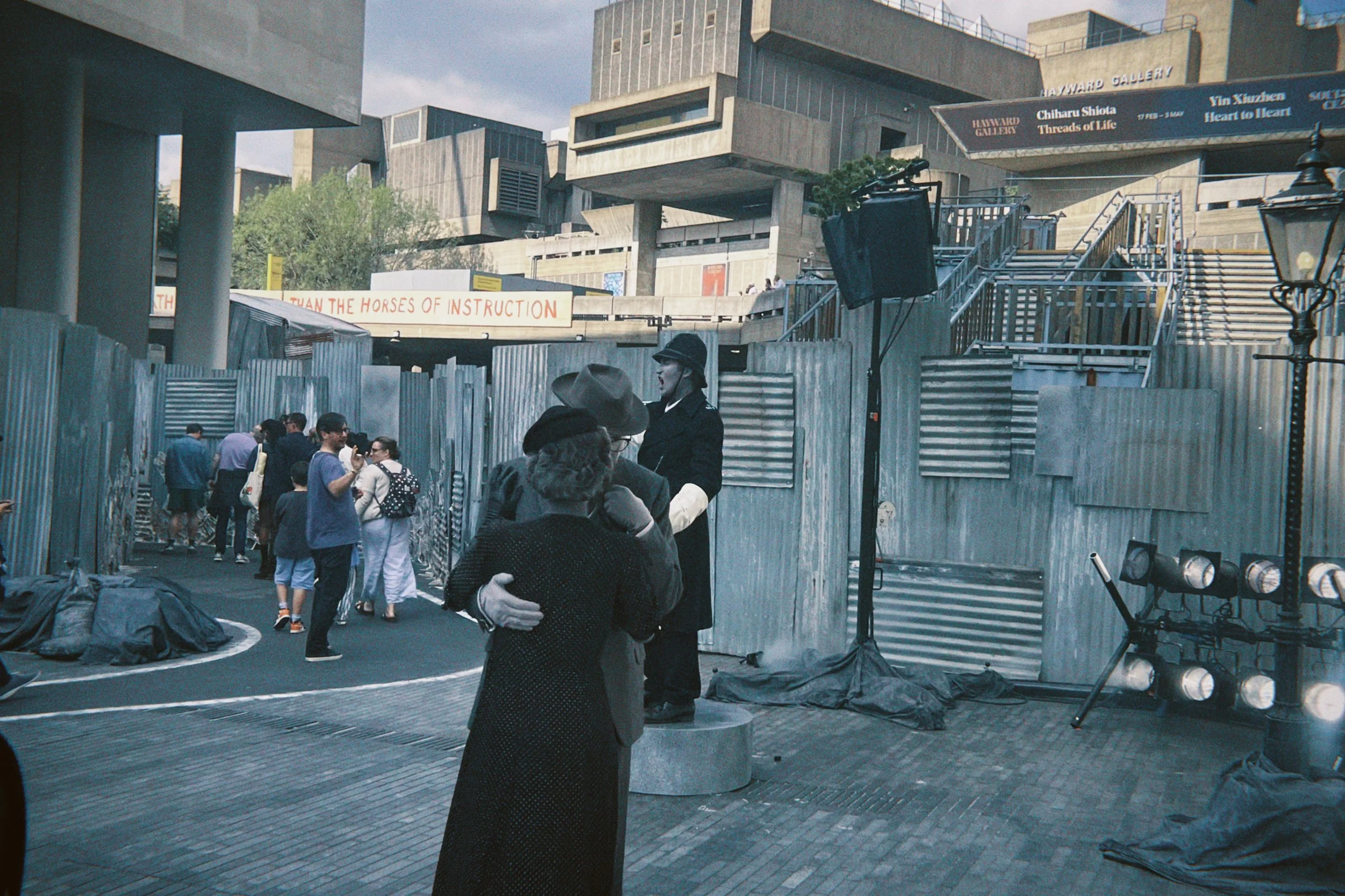
Photo: PKB
Overall, You Are Here succeeded because it embraced contradiction rather than simplifying British identity. Through layered symbolism, sound and immersive world-building, the production explored war, rebellion, immigration, race, class and national memory in a way that felt chaotic, uncomfortable and visually stunning. As somebody involved in creative direction and music production, it was inspiring seeing theatre, installation art and contemporary sound culture merge so effectively to present Britain not as one fixed story, but as a constantly evolving collision of histories, tensions and voices.
I would also like to extend sincere thanks to Southbank Centre and Raw Material for providing the opportunity to experience and engage with this work.
You Are Here |Directed by Danny Boyle
The show ran all day at The Southbank Centre on 3rd May 2026 as part of the 75th Anniversary celebrations.
A special thank you to Southbank Centre for inviting Raw Material reviewers along to see this incredible event and for supporting us in all areas of accessibility.